Dental Treatment, Health Tourism, Implant, Sinus Lifting

Why Some Patients Need Sinus Lifting Before Implants

Dental implants are one of the most effective solutions for replacing missing teeth. However, not every patient has sufficient bone volume in the upper jaw to support an implant immediately. In these situations, a sinus lift procedure may be recommended before implant placement. Understanding why some patients need sinus lifting before implants can help patients feel more confident about their treatment plan and long-term results.

A sinus lift is a common and predictable procedure designed to increase bone height in the upper jaw, creating a stable foundation for dental implants. In this article, we explain why some patients need sinus lifting before implants, how the procedure works, and what patients can expect during recovery.

What Is a Sinus Lift?

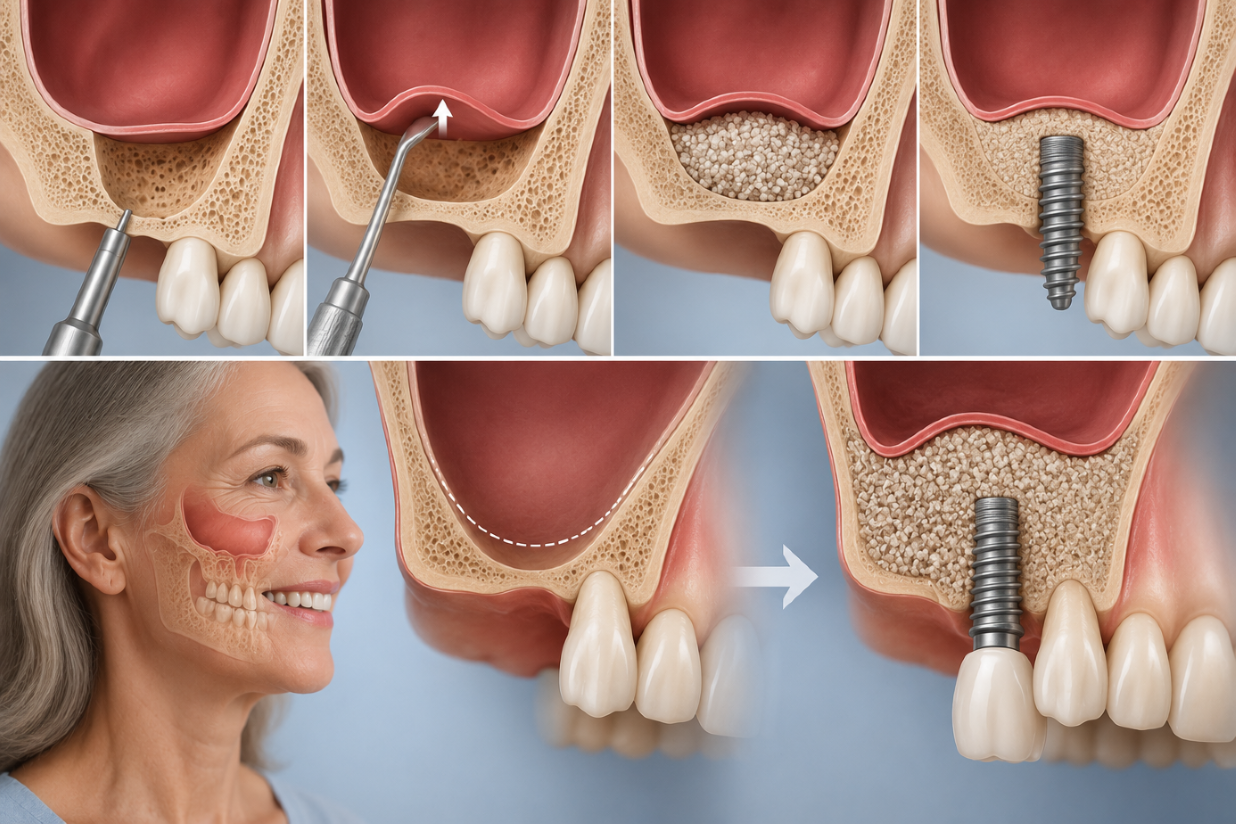
A sinus lift, also known as sinus augmentation, is a surgical procedure that adds bone to the upper back jaw beneath the maxillary sinus. The sinus membrane is gently lifted upward, and bone graft material is placed in the newly created space.

This additional bone allows dental implants to be placed securely once healing is complete. Understanding why some patients need sinus lifting before implants starts with recognizing the importance of adequate bone support for implant success.

Why Is Bone Volume Important for Dental Implants?

Dental implants rely on healthy jawbone for stability. The implant acts as an artificial tooth root and must be fully surrounded by bone to achieve successful osseointegration.

When there is insufficient bone height in the upper jaw, implants may not have enough support. This can increase the risk of implant instability or failure.

Several factors can contribute to bone loss in this area, making sinus lifting necessary before treatment.

Common Reasons Patients Need a Sinus Lift

Bone Loss After Tooth Extraction

When a tooth is missing for an extended period, the jawbone begins to shrink because it no longer receives stimulation from the tooth root.

Over time, this bone resorption can leave insufficient bone for implant placement.

Naturally Large Sinus Cavities

Some patients naturally have larger maxillary sinuses that extend lower into the jawbone. Even if little bone loss has occurred, there may not be enough vertical bone height available for an implant.

Periodontal Disease

Advanced gum disease can damage both soft tissue and supporting bone structures. Significant bone loss caused by periodontal disease may require bone augmentation before implants can be placed safely.

Long-Term Missing Teeth

The longer a tooth remains missing, the greater the likelihood of bone deterioration. Patients who have lived with missing upper molars or premolars for many years are often candidates for sinus lift procedures.

How Is a Sinus Lift Performed?

The procedure is typically performed under local anesthesia. The dentist or oral surgeon creates a small access point in the upper jaw and gently lifts the sinus membrane.

Bone graft material is then inserted into the space beneath the sinus. The area is closed and allowed to heal over several months while new bone forms.

Once sufficient bone has developed, dental implant placement can proceed.

Benefits of Sinus Lifting Before Implants

A sinus lift offers several important advantages:

  • Creates adequate bone volume for implant placement
  • Improves long-term implant stability
  • Increases implant success rates
  • Allows treatment in areas previously unsuitable for implants
  • Restores proper function and chewing ability

For many patients, sinus augmentation makes implant treatment possible when it would otherwise not be feasible.

Recovery and Healing

Most patients experience mild swelling and discomfort for a few days after the procedure. Following post-operative instructions carefully helps ensure smooth healing.

Patients are usually advised to:

  • Avoid blowing their nose forcefully
  • Sneeze with an open mouth when possible
  • Avoid smoking during recovery
  • Maintain good oral hygiene
  • Attend all follow-up appointments

Healing times vary, but bone grafts generally require several months to fully integrate before implants can be placed.

Final Thoughts

Understanding why some patients need sinus lifting before implants helps patients appreciate the role of bone support in successful implant treatment. While the idea of additional surgery may seem intimidating, sinus lifting is a well-established procedure that significantly improves implant outcomes.

By creating a stronger foundation for dental implants, sinus augmentation allows many patients with bone loss to enjoy the benefits of a stable, functional, and long-lasting smile.

Cosmetic Dentistry in Turkey

Optimum Dental Turkey Advantages

Contact Us For Any Questions