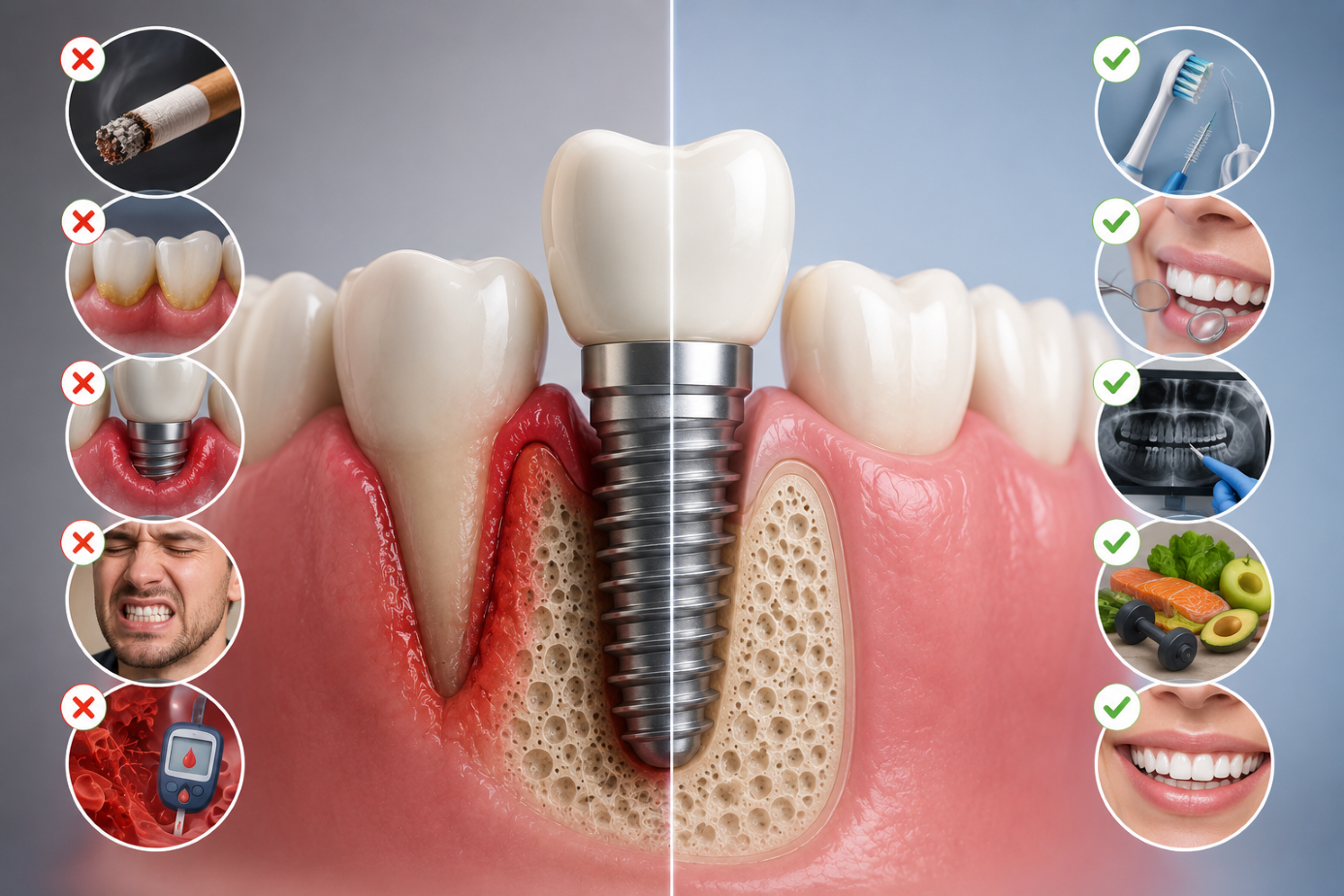
What Is Dental Implant Failure?
Dental implant failure occurs when an implant does not properly integrate with the jawbone or loses stability after successful placement. Failure may happen shortly after surgery (early failure) or years later (late failure).
Understanding can dental implants fail? causes and prevention begins with recognizing that implant failure is usually linked to specific risk factors rather than the implant itself.
Early Implant Failure
Early implant failure typically occurs during the healing period before the implant fully bonds with the jawbone.
Common causes include:
- Poor osseointegration
- Infection at the surgical site
- Insufficient bone volume or density
- Excessive pressure on the implant during healing
- Certain medical conditions that affect healing
When an implant fails during this stage, it may become loose or fail to integrate properly with the surrounding bone.
Late Implant Failure
Late implant failure develops months or years after successful placement. In many cases, the implant initially functions normally before complications arise.
Potential causes include:
- Peri-implantitis (infection around the implant)
- Chronic gum disease
- Bone loss surrounding the implant
- Teeth grinding (bruxism)
- Poor oral hygiene
- Smoking
Regular dental examinations can often detect these issues before they become severe.
Risk Factors That Increase Implant Failure
Several factors may increase the likelihood of implant complications:
Smoking
Smoking significantly reduces blood flow and slows healing. Smokers generally experience higher implant failure rates than non-smokers.
Poor Oral Hygiene
Dental implants require the same level of care as natural teeth. Plaque accumulation can lead to inflammation and infection around the implant.
Uncontrolled Medical Conditions
Conditions such as uncontrolled diabetes may impair healing and increase the risk of infection.
Insufficient Bone Support
Patients with severe bone loss may require bone grafting before implant placement to create a stable foundation.
Teeth Grinding
Excessive grinding or clenching can place excessive force on implants and surrounding structures.
Warning Signs of Implant Problems
Patients should contact their dentist if they experience:
- Persistent pain
- Implant mobility
- Swollen or bleeding gums
- Difficulty chewing
- Gum recession around the implant
- Signs of infection
Early intervention can often prevent more serious complications.
How to Prevent Dental Implant Failure
Fortunately, most implant complications can be prevented through proper planning and maintenance.
Choose an Experienced Implant Dentist
Accurate diagnosis, treatment planning, and surgical technique play a crucial role in implant success.
Follow Post-Operative Instructions
Patients should carefully follow all healing guidelines, including dietary restrictions and oral hygiene recommendations.
Maintain Excellent Oral Hygiene
Daily brushing, flossing, and professional cleanings help prevent infection and inflammation.
Attend Regular Check-Ups
Routine dental visits allow dentists to monitor implant health and identify potential issues early.
Avoid Smoking
Reducing or quitting smoking can significantly improve healing and long-term implant success.
Final Thoughts
While dental implants are among the most reliable restorative treatments available, understanding can dental implants fail? causes and prevention allows patients to make informed decisions and reduce potential risks.
Most implant failures are preventable with proper treatment planning, excellent oral hygiene, healthy lifestyle habits, and regular professional care. By understanding can dental implants fail? causes and prevention, patients can maximize the longevity of their dental implants and enjoy a healthy, confident smile for many years.


 Up to 70% less than Europe.