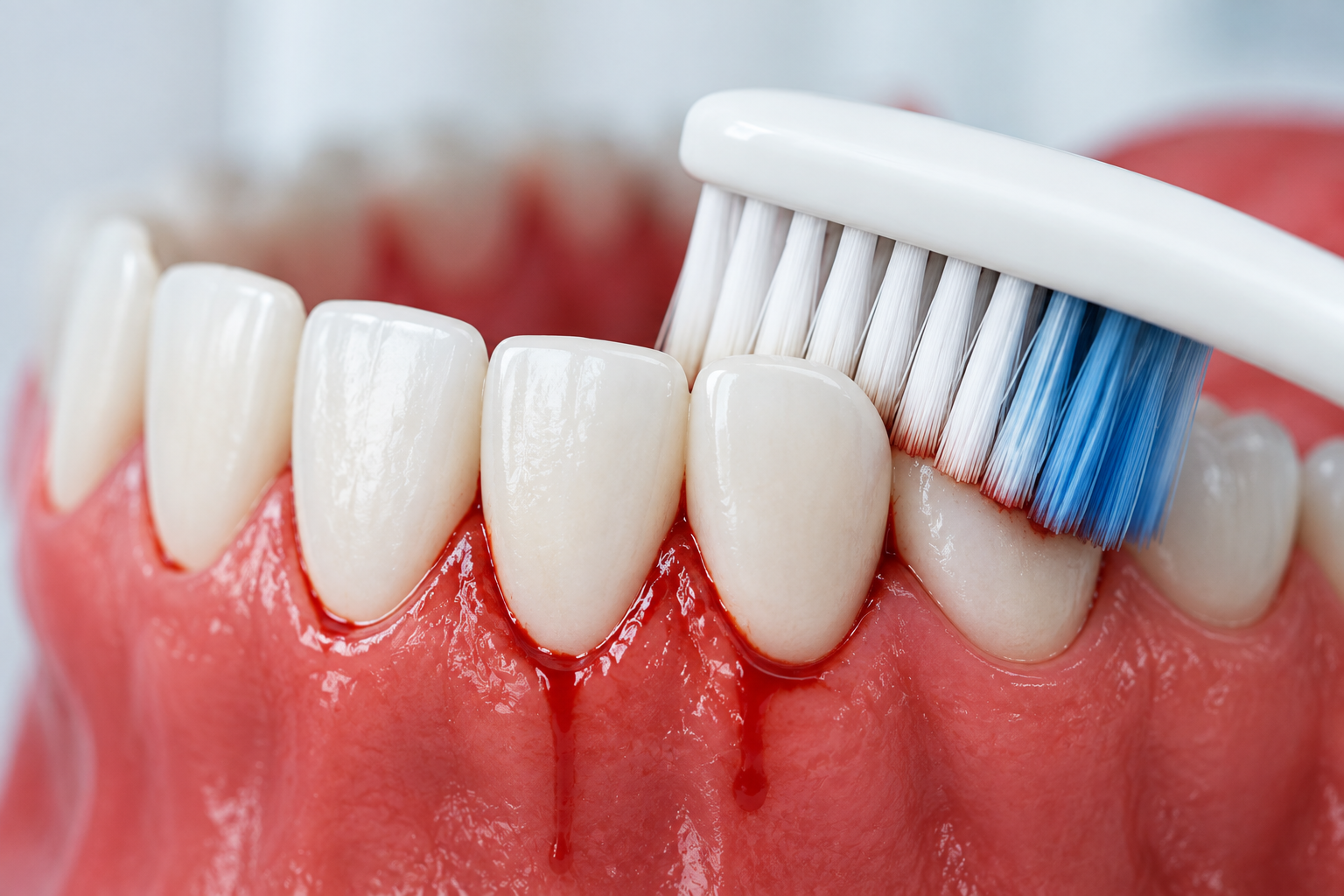
Noticing blood when you brush or floss your teeth can be worrying. Although occasional bleeding may seem harmless, it can sometimes be a sign that your gums need more attention.
The most common reason for bleeding gums is inflammation caused by plaque buildup along the gumline. However, several other factors can contribute to gum bleeding, including brushing technique, gum disease, hormonal changes and certain medical conditions.
Understanding why your gums bleed can help you identify when it is time to improve your oral hygiene or schedule a dental examination.
What Causes Gums to Bleed When Brushing?
There are several possible causes of gum bleeding.
1. Plaque Buildup
Plaque is a sticky layer of bacteria that continuously forms on teeth. If it is not removed effectively through brushing and cleaning between the teeth, it can accumulate around the gumline.
The bacteria in plaque can irritate the gums, causing inflammation, redness, swelling and bleeding.
2. Gingivitis
Gingivitis is an early form of gum disease that develops when plaque remains around the gums for too long.
Common signs include:
- Red or swollen gums
- Bleeding during brushing or flossing
- Tender gums
- Bad breath
- Changes in the appearance of the gumline
The good news is that gingivitis can often be managed effectively when treated early and combined with good daily oral hygiene.
3. Periodontitis
If gum inflammation is left untreated, it can progress to periodontitis, a more advanced form of gum disease.
Periodontitis can affect the tissues and bone supporting the teeth. Symptoms may include persistent gum bleeding, gum recession, loose teeth, changes in the bite and persistent bad breath.
Because advanced gum disease can cause permanent damage to the structures supporting your teeth, professional dental care is important.
4. Brushing Too Hard
Bleeding does not always mean that you are brushing too little. Using excessive force or a hard-bristled toothbrush can irritate the gum tissue.
A soft-bristled toothbrush and gentle, controlled movements are generally preferable. Your dentist or dental hygienist can also demonstrate an appropriate brushing technique.
5. Inadequate Flossing
If you have recently started flossing, your gums may bleed temporarily, especially if plaque has accumulated between the teeth.
However, persistent bleeding should not simply be ignored. It may indicate inflammation or another underlying problem that requires professional evaluation.
6. Hormonal Changes
Hormonal changes can make the gums more sensitive and susceptible to inflammation. This can occur during periods such as pregnancy, puberty or other hormonal fluctuations.
Maintaining consistent oral hygiene and attending regular dental examinations can help manage gum health during these periods.
7. Smoking and Tobacco Use
Smoking can negatively affect gum health and increase the risk of periodontal disease. It can also influence how gum tissues respond to inflammation.
If you smoke, discussing your oral health and tobacco use with your dentist can help you understand your individual risks.
8. Certain Medications or Health Conditions
Some medications and medical conditions can affect the gums or increase the likelihood of bleeding.
If your gums frequently bleed and you are taking medication or have an underlying health condition, inform your dentist. They can determine whether further evaluation is appropriate.
Should You Stop Brushing If Your Gums Bleed?
No. Stopping brushing completely can allow more plaque to accumulate and potentially make gum inflammation worse.
Instead, use a soft toothbrush and brush gently but thoroughly. Clean between your teeth daily and pay particular attention to the gumline.
If bleeding continues despite good oral hygiene, arrange an appointment with your dentist.
Is It Normal for Gums to Bleed When Flossing?
Occasional bleeding can occur when flossing, particularly if you are new to flossing or have inflammation between the teeth.
However, healthy gums generally should not bleed regularly. Persistent bleeding is a reason to have your gums examined by a dental professional.
How Can You Stop Gums From Bleeding?
Improving your daily oral hygiene can help reduce gum inflammation and bleeding.
Consider the following habits:
Brush Twice a Day
Brush your teeth for approximately two minutes twice a day using fluoride toothpaste and a soft-bristled toothbrush.
Clean Between Your Teeth
Dental floss or interdental brushes can help remove plaque and food particles that a toothbrush cannot reach.
Use Gentle Brushing Technique
Avoid aggressive scrubbing. Instead, use small, gentle movements along the gumline.
Maintain Regular Dental Visits
Professional dental examinations and cleaning can help identify plaque, tartar and gum problems that cannot always be managed effectively at home.
Avoid Tobacco
Reducing or stopping tobacco use can benefit your overall oral health and reduce factors associated with gum disease.
When Should You See a Dentist?
You should arrange a dental examination if your bleeding gums are persistent, frequent or accompanied by other symptoms.
Contact your dentist if you experience:
- Swollen or red gums
- Persistent bad breath
- Gum recession
- Loose teeth
- Pus around the gums
- Pain or tenderness
- Changes in your bite
- Increasing tooth sensitivity
Early assessment can help identify the cause and prevent a minor gum problem from developing into a more serious condition.
Can Bleeding Gums Be Prevented?
In many cases, good oral hygiene can significantly reduce the risk of gum inflammation.
A consistent routine should include brushing twice daily, cleaning between the teeth, maintaining a balanced diet, avoiding tobacco and attending regular dental check-ups.
It is also important to replace your toothbrush or toothbrush head regularly and avoid brushing with excessive pressure.
Frequently Asked Questions
Why do my gums bleed when I brush?
The most common cause is plaque-related gum inflammation. However, bleeding can also be associated with brushing too hard, gum disease, hormonal changes, medications or other health factors.
Should I be worried if my gums bleed?
Occasional bleeding may not indicate a serious problem, but regular or persistent bleeding should be assessed by a dentist, particularly if it occurs alongside swelling, pain, bad breath or gum recession.
Can brushing make bleeding gums worse?
Brushing too aggressively can irritate the gums. However, stopping brushing is not recommended because plaque buildup can increase inflammation. Use a soft toothbrush and gentle technique instead.
How long does it take for gum bleeding to stop?
The timeframe depends on the underlying cause. If bleeding is related to mild plaque-induced inflammation, improved oral hygiene may help. Persistent bleeding requires professional assessment.
Can gum bleeding be a sign of gum disease?
Yes. Gum bleeding is one of the common signs of gingivitis and can also occur with periodontitis. A dental examination is needed to determine the cause.
What is the best way to prevent gum bleeding?
Consistent brushing with fluoride toothpaste, daily interdental cleaning, regular dental check-ups and professional cleaning when needed can help maintain healthy gums.
Final Thoughts
Gum bleeding should not automatically be considered normal. In many cases, it is related to plaque and gum inflammation, but it can also have other causes.
If your bleeding gums continue despite maintaining good oral hygiene, a dental examination can help determine the underlying cause. Early diagnosis and appropriate treatment can protect your gums, teeth and long-term oral health.
Optimum Dental Turkey Advantages
Free Consultation
Contact Us for an Online or In-Person Consultation
During your consultation, you will receive:
✔️ A comprehensive dental examination
✔️ A personalized treatment plan
✔️ A full cost estimate and treatment strategy
Customer Care Manager
By communicating with our professional translators, we ensure that everyone receives health care comfortably.

VIP Services
Reach our clinic with luxury vehicles with our VIP Service and receive accommodation in luxury hotels.