Dental Health, Dental Treatment, Dental Veneer, General, Health Tourism, Oral Hygiene, Zirconium Crown

Can a Damaged Tooth Be Saved With a Dental Crown?

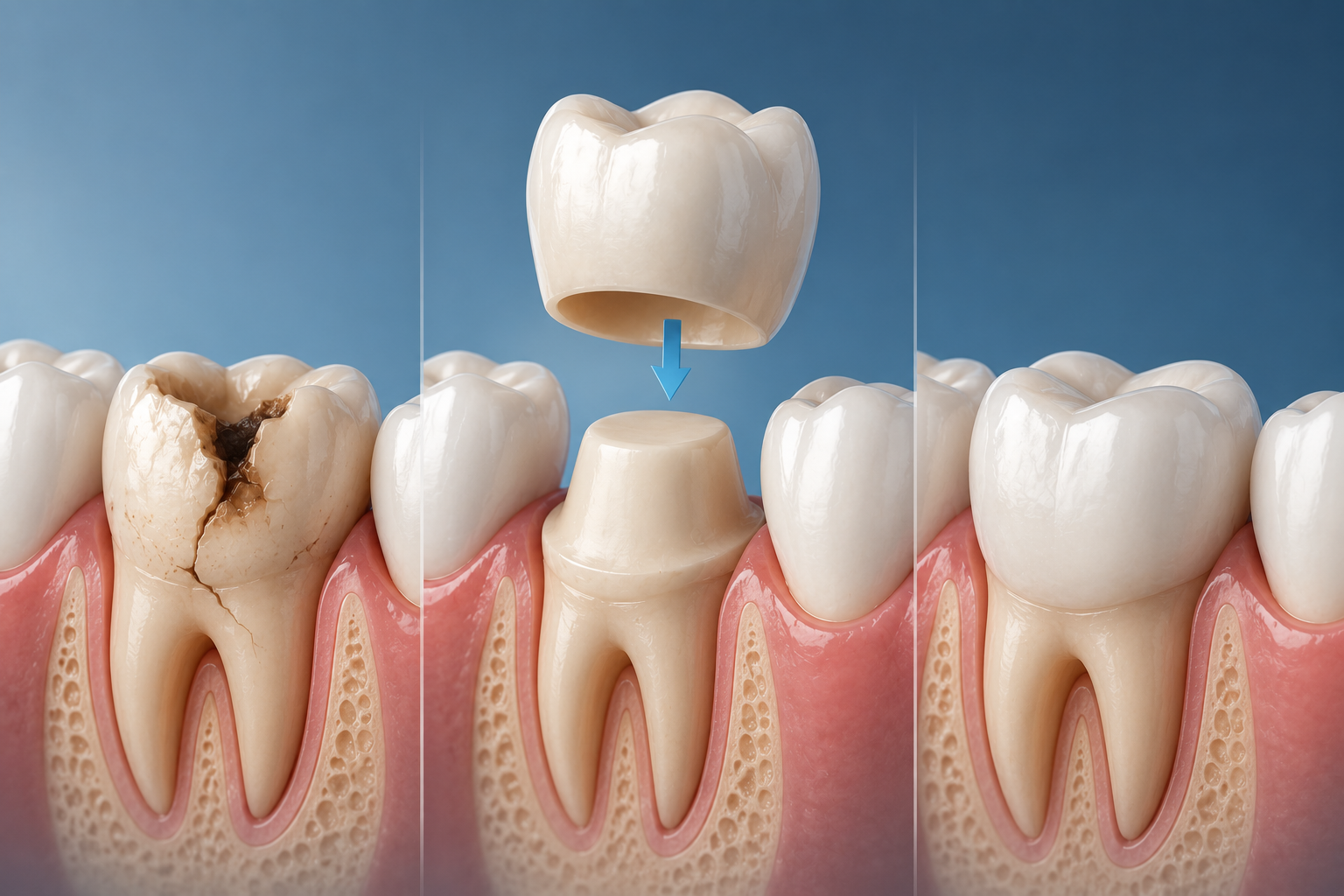
A damaged or weakened tooth does not always need to be extracted. In many cases, a dental crown can restore the tooth’s strength, function and appearance while allowing the natural tooth to remain in place.

Whether a crown is suitable depends on how much healthy tooth structure remains, the condition of the tooth root, the health of the surrounding gums and the overall stability of the tooth.

What Is a Dental Crown?

A dental crown is a custom-made restoration that covers most or all of the visible part of a tooth. It is designed to protect a weakened tooth and restore its shape, strength and function.

Crowns can be made from different materials, including zirconia, porcelain, ceramic and metal-based materials. Your dentist will recommend the most appropriate option based on the location of the tooth, your bite, aesthetic requirements and clinical condition.

Can a Damaged Tooth Be Saved With a Crown?

Yes, in many cases, a damaged tooth can be restored with a dental crown if enough healthy tooth structure remains to support the restoration.

A crown may be considered when a tooth has:

  • A large filling
  • Extensive decay that has been treated
  • A significant crack or fracture
  • Severe wear
  • A weakened structure following root canal treatment
  • A broken portion that can still be restored
  • Significant structural damage but a healthy and usable root

However, a crown cannot repair every type of dental damage. If the tooth is severely fractured below the gumline, has extensive decay that cannot be restored, or has an unfavorable root condition, extraction may sometimes be necessary.

When Is a Dental Crown Recommended?

Dentists may recommend a crown when a tooth has lost too much structure to be reliably restored with a simple filling or bonding.

After Root Canal Treatment

Root canal treatment removes infected or damaged tissue from inside the tooth. Afterward, the remaining tooth structure may be weaker and more susceptible to fracture.

A crown can provide additional protection and help restore normal chewing function, depending on the tooth and clinical situation.

Large or Failing Fillings

A tooth with a very large filling may have limited remaining natural structure. Replacing the filling with a crown can sometimes provide greater coverage and protection.

Cracked or Broken Teeth

A crown may help protect a tooth with certain types of cracks or fractures. The location and depth of the crack are important factors in determining whether the tooth can be saved.

Severe Tooth Wear

Grinding, clenching and other factors can cause significant tooth wear. Crowns may sometimes be included as part of a broader restorative treatment plan when sufficient tooth structure remains.

When Is a Crown Not Enough to Save a Tooth?

Although crowns can restore many weakened teeth, they are not suitable for every situation.

A dentist may consider extraction if:

  • The tooth is fractured deep below the gumline
  • There is insufficient healthy tooth structure remaining
  • Severe decay extends too far below the gum
  • The tooth has significant root damage
  • Advanced periodontal disease has severely compromised tooth support
  • The tooth cannot be predictably restored

The goal of modern restorative dentistry is generally to preserve a natural tooth whenever it can be treated safely and predictably. However, keeping a tooth that cannot be adequately restored may lead to ongoing problems.

What Happens Before Getting a Dental Crown?

Before recommending a crown, your dentist will examine the tooth and surrounding tissues.

The assessment may include:

Clinical Examination

Your dentist will check the remaining tooth structure, gums, bite and signs of infection or inflammation.

Dental X-Rays

X-rays can help evaluate the tooth root and surrounding bone and identify problems that may not be visible during a visual examination.

Evaluation of the Bite

Your bite and chewing forces are important when planning a crown. Excessive pressure can increase the risk of complications, particularly in patients who grind or clench their teeth.

Treatment Planning

The dentist will determine whether a crown is appropriate and whether additional treatment, such as root canal therapy, periodontal treatment or a buildup, is required first.

What Is a Dental Crown Buildup?

Sometimes there is not enough tooth structure remaining to support a crown directly.

In these situations, the dentist may use a restorative material to rebuild part of the tooth before preparing it for a crown. This is often called a core buildup.

Whether a buildup is appropriate depends on the amount and quality of the remaining natural tooth structure.

Can a Crown Make a Broken Tooth Strong Again?

A crown can protect and reinforce the remaining tooth structure, but it does not make the natural tooth completely immune to future damage.

The long-term outcome depends on factors such as:

  • The amount of remaining natural tooth structure
  • The health of the root
  • Crown design and fit
  • Bite forces
  • Oral hygiene
  • Gum health
  • Teeth grinding or clenching
  • Regular dental care

A properly planned and maintained crown can provide durable restoration, but it still requires appropriate care.

How Long Can a Dental Crown Last?

The lifespan of a crown varies between patients. Factors such as material, oral hygiene, bite forces, tooth location and maintenance can all affect its longevity.

Good daily oral hygiene and regular dental examinations can help identify potential problems early and maintain the health of the crowned tooth.

It is also important to remember that the crown does not protect the tooth from every possible problem. Decay can still develop around the edges of a restoration if plaque is not adequately controlled.

How Should You Care for a Crown?

Caring for a crowned tooth is similar to caring for your natural teeth.

You should:

  • Brush twice a day with fluoride toothpaste
  • Clean between your teeth daily
  • Pay attention to the gumline around the crown
  • Avoid using your teeth to open packages
  • Avoid repeatedly biting extremely hard objects
  • Attend regular dental examinations
  • Follow your dentist’s recommendations

If you grind your teeth, your dentist may also recommend additional protection, such as a night guard.

What If a Crowned Tooth Starts Hurting?

Pain in a crowned tooth should not be ignored. It may be related to several factors, including tooth decay, inflammation, infection, bite problems or issues affecting the surrounding tissues.

Contact your dentist if you experience:

  • Persistent pain
  • Sensitivity that does not improve
  • Pain when biting
  • Swelling
  • Gum tenderness
  • A loose crown
  • A cracked or damaged restoration

An examination can help identify the underlying cause and determine whether the crown or the tooth requires treatment.

Can a Crown Prevent Tooth Extraction?

In appropriate cases, restoring a tooth with a crown can help avoid extraction by protecting the remaining natural structure.

However, a crown is only effective when the tooth has enough healthy structure and support to be restored. The decision should always be based on a professional dental assessment rather than the appearance of the tooth alone.

Frequently Asked Questions

Can a damaged tooth always be saved with a crown?

No. A crown can restore many weakened or broken teeth, but it cannot predictably save a tooth with severe root damage, deep fractures or insufficient remaining tooth structure.

Is a crown better than extracting a damaged tooth?

When a tooth can be predictably restored, preserving the natural tooth is often preferred. However, extraction may be necessary when the tooth cannot be adequately restored.

Can a cracked tooth be treated with a crown?

Some cracked teeth can be protected with a crown, depending on the location and depth of the crack. A dentist must evaluate the tooth before deciding whether restoration is possible.

Does a root canal always require a crown?

Not every root-treated tooth requires the same restoration. However, teeth that have lost significant structure may benefit from a crown for additional protection. Your dentist can determine the appropriate restoration for your case.

Can a crown be placed over a tooth with decay?

Decay generally needs to be treated before a crown is placed. The dentist must first determine whether enough healthy tooth structure remains to support the restoration.

What happens if there is not enough tooth left for a crown?

Depending on the situation, the dentist may be able to rebuild the tooth with a core buildup or another restorative technique. If the tooth cannot provide adequate support, extraction may be considered.

Final Thoughts

A damaged tooth does not automatically mean that extraction is necessary. If sufficient healthy tooth structure remains and the root and surrounding tissues are stable, a dental crown may provide an effective way to restore and protect the tooth.

The most appropriate treatment depends on the type and extent of damage, the condition of the tooth and your overall oral health. A thorough examination and appropriate dental imaging can help your dentist determine whether the natural tooth can be preserved.

Cosmetic Dentistry in Turkey

Optimum Dental Turkey Advantages

Contact Us For Any Questions