Dental Treatment, General

Signs You May Need a Root Canal Treatment

A toothache is often easy to ignore at first, especially if the pain comes and goes. However, some dental problems affect the inner pulp of the tooth and require prompt treatment to prevent serious complications. Understanding signs you may need a root canal treatment can help you seek professional care before the condition worsens.

Root canal treatment is a common procedure that removes infected or damaged pulp while preserving the natural tooth. Knowing signs you may need a root canal treatment allows patients to protect their oral health and avoid unnecessary tooth loss.

What Is a Root Canal Treatment?

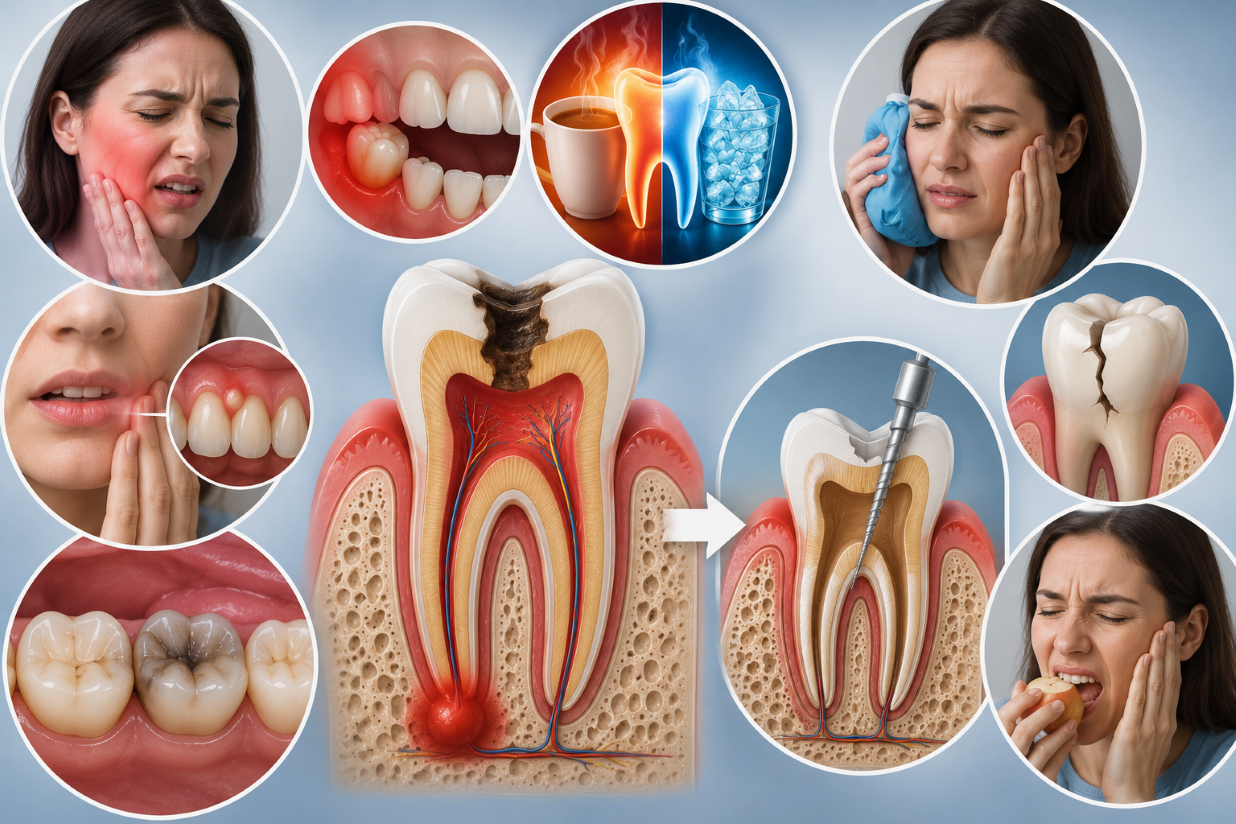
Inside every tooth is a soft tissue called the dental pulp, which contains nerves, blood vessels, and connective tissue. When the pulp becomes infected due to deep decay, trauma, or cracks, bacteria can spread inside the tooth and cause severe pain.

A root canal treatment removes the infected pulp, disinfects the root canals, and seals the tooth to prevent further infection. This procedure allows patients to keep their natural tooth while eliminating pain and restoring normal function.

Understanding signs you may need a root canal treatment begins with recognizing the symptoms of pulp infection.

Persistent Tooth Pain

One of the most common warning signs is continuous or recurring tooth pain.

The pain may:

  • Be sharp or throbbing
  • Worsen when chewing
  • Occur spontaneously without eating
  • Become more intense at night

Persistent discomfort should never be ignored, as it often indicates inflammation or infection inside the tooth.

Sensitivity to Hot and Cold

Temporary sensitivity after consuming hot or cold foods is common. However, prolonged pain that lingers even after the temperature stimulus is removed may indicate nerve damage.

If drinking coffee, tea, or cold water causes lasting discomfort, it is important to have the tooth evaluated by a dentist.

Swollen or Tender Gums

Infection inside the tooth can spread to the surrounding gum tissue.

Symptoms may include:

  • Swelling near the affected tooth
  • Tenderness when touching the gums
  • A small pimple-like bump (dental abscess)
  • Drainage of pus or an unpleasant taste

These signs often indicate that the infection has progressed beyond the tooth itself.

Tooth Discoloration

A tooth that gradually becomes darker than neighboring teeth may have experienced trauma or pulp damage.

The discoloration occurs because the nerve tissue inside the tooth has begun to break down. While not every darkened tooth requires root canal treatment, it should always be examined by a dental professional.

Pain While Chewing

If biting or chewing causes sharp pain, the tooth’s internal tissues may be inflamed or infected.

Patients sometimes avoid chewing on one side of the mouth because of discomfort. Left untreated, the condition can continue to worsen.

A Chipped or Cracked Tooth

A crack or fracture may expose the pulp to bacteria, increasing the risk of infection.

Even if the injury seems minor, bacteria can enter through microscopic cracks and eventually lead to pulp inflammation requiring root canal therapy.

Why Early Treatment Is Important

Delaying treatment can allow the infection to spread deeper into the surrounding tissues and bone.

Without prompt care, complications may include:

  • Dental abscess formation
  • Bone loss around the tooth
  • Severe pain
  • Swelling of the face
  • Tooth extraction

Early diagnosis significantly improves the chances of saving the natural tooth.

Can a Root Canal Save Your Tooth?

In many cases, yes. Modern root canal treatment has a very high success rate and allows patients to keep their natural teeth for many years.

With proper restoration, such as a dental crown when necessary, the treated tooth can function normally and remain healthy long-term.

Final Thoughts

Recognizing signs you may need a root canal treatment can help prevent serious dental complications and preserve your natural smile. Persistent pain, prolonged sensitivity, swelling, tooth discoloration, and discomfort while chewing should never be ignored.

If you notice any of these symptoms, scheduling a dental examination as soon as possible can lead to early treatment, relieve pain, and improve the long-term health of your teeth.

Cosmetic Dentistry in Turkey

Optimum Dental Turkey Advantages

Contact Us For Any Questions