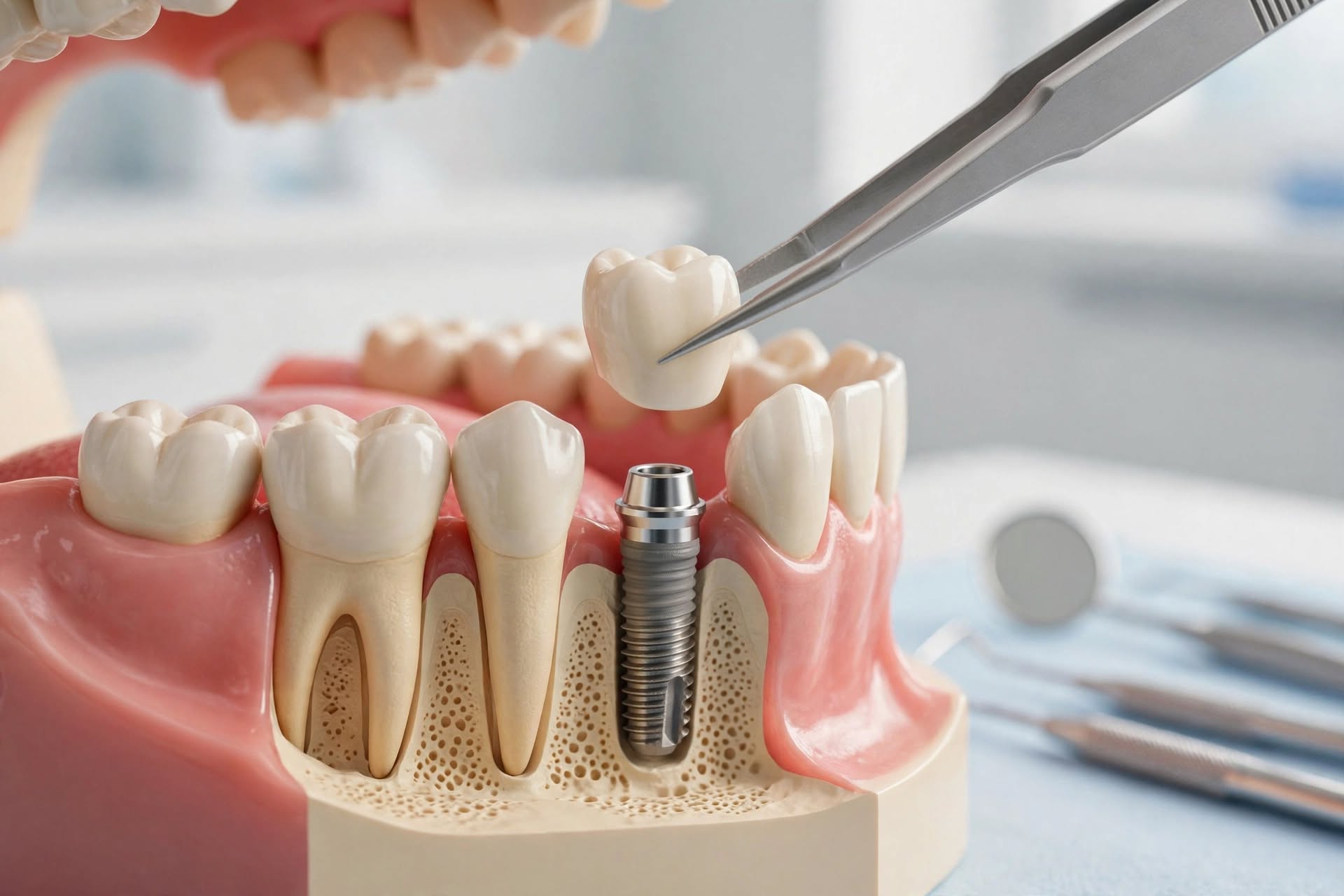
Dental implant treatment has changed significantly with advances in digital dentistry, implant design, surgical techniques, and restorative materials. One of the developments that has attracted considerable attention is immediate loading for dental implants, an approach that may allow a temporary tooth or prosthetic restoration to be placed shortly after implant surgery in carefully selected cases.
But what does immediate loading actually mean? Is it suitable for every patient? And how does it differ from the traditional dental implant healing process?
This guide explains how immediate implant loading works, its potential benefits and limitations, and the factors dentists consider when deciding whether a patient is a suitable candidate.
What Does Immediate Loading Mean?
Immediate loading refers to placing a temporary dental restoration on an implant shortly after the implant is surgically positioned in the jawbone.
In conventional implant treatment, the implant is generally allowed to heal and integrate with the surrounding bone before the final restoration is attached. This biological process, known as osseointegration, provides the foundation for long-term implant stability.
With an immediate loading approach, the implant may receive controlled functional forces much earlier. Depending on the clinical situation, a temporary crown, bridge, or full-arch prosthesis can sometimes be attached on the same day as implant placement or within a short period afterward.
It is important to understand that “immediate loading” does not necessarily mean receiving the final permanent teeth on the day of surgery. In many cases, the initial restoration is temporary and is later replaced with the definitive prosthesis after healing and successful implant integration.
How Does Immediate Implant Loading Work?
The process begins with a detailed examination and treatment planning. Your dentist evaluates the condition of your teeth, gums, jawbone, bite, and overall oral health.
Modern diagnostic tools such as digital scans and 3D imaging can help the dental team evaluate bone anatomy and plan implant placement more precisely.
The typical process may include:
1. Comprehensive Examination
The dentist assesses the condition of the teeth, gums, bone, and surrounding anatomical structures. Medical and dental history are also considered.
2. Digital Treatment Planning
Digital impressions, intraoral scans, photographs, and 3D imaging may be combined to create a detailed treatment plan.
3. Implant Placement
The dental implants are surgically positioned in predetermined locations within the jawbone.
4. Temporary Restoration
If the implants demonstrate sufficient stability and other clinical conditions are favorable, a temporary restoration may be connected shortly after surgery.
5. Healing and Osseointegration
During the healing period, the implants gradually integrate with the surrounding bone. The temporary restoration may be designed to minimize excessive forces during this phase.
6. Final Restoration
Once healing is complete and the dentist confirms that the implants are stable and healthy, the temporary prosthesis can be replaced with the definitive restoration.
What Are the Benefits of Immediate Loading?
One of the main attractions of immediate loading is the possibility of reducing the time a patient spends without teeth or with a removable temporary prosthesis.
Potential benefits may include:
- Faster temporary tooth replacement: In suitable cases, patients may receive temporary teeth shortly after implant placement.
- Improved appearance: A temporary restoration can provide an immediate improvement in the appearance of the smile.
- Better function: Depending on the treatment plan, patients may be able to use a temporary prosthesis during the healing period.
- Fewer separate treatment stages: Some treatment plans can combine surgical and restorative stages more efficiently.
- Patient convenience: Reducing the number of separate appointments may make treatment more convenient, particularly for patients travelling for dental care.
However, these benefits depend heavily on the individual case. Immediate loading is not automatically better or faster for every patient.
Who Can Be a Candidate for Immediate Loading?
Not every dental implant patient is suitable for immediate loading.
The dentist may consider several factors, including:
- The amount and quality of available bone
- Primary stability of the dental implants
- Number and position of implants
- Bite and chewing forces
- Presence of gum disease or active infection
- Overall oral health
- Smoking habits
- The type of restoration being planned
- The patient’s ability to follow post-operative instructions
For full-arch treatments, multiple implants can sometimes be strategically positioned to support a temporary fixed prosthesis. However, the exact approach depends on the patient’s anatomy and treatment requirements.
Is Immediate Loading Safe?
When appropriate case selection, precise treatment planning, implant stability, and proper clinical protocols are present, immediate loading can be a successful treatment approach.
However, placing a restoration too early on an unstable implant can increase the risk of excessive movement during the healing process. Excessive micromovement may interfere with successful osseointegration.
For this reason, the decision should always be made by a qualified dental professional following a detailed clinical examination.
Patients should also follow their dentist’s instructions regarding diet, oral hygiene, medication, and follow-up appointments during the healing period.
Immediate Loading vs. Traditional Implant Loading
The main difference is the timing of restoration placement.
With a traditional implant protocol, the implant is usually given a healing period before it is restored with the definitive prosthesis.
With immediate loading for dental implants, a temporary restoration may be connected much sooner when the clinical conditions are favorable.
Neither approach is universally suitable for every patient. The choice depends on factors such as implant stability, bone conditions, surgical complexity, bite forces, and the type of restoration required.
A carefully planned conventional approach may be more appropriate when immediate loading would create unnecessary biological or mechanical risks.
Can You Eat Normally After Immediate Loading?
Dietary recommendations depend on the type of restoration and the stability of the implants.
Patients receiving an immediately loaded temporary restoration are often advised to follow a soft-food diet during the early healing period. Hard, sticky, or excessively chewy foods may place unnecessary forces on the implants and temporary prosthesis.
The dentist will provide personalized instructions based on the specific treatment.
Following these recommendations is an important part of protecting the implants while osseointegration takes place.
How Long Does the Temporary Restoration Last?
The temporary restoration is designed to serve the patient during the healing and integration period.
Its duration can vary depending on the treatment plan, implant stability, healing progress, and type of restoration. Once the dentist determines that healing has progressed appropriately, the temporary restoration can be replaced with the final prosthesis.
The final restoration may be made from materials such as zirconia or other laboratory-selected restorative materials depending on the patient’s functional and aesthetic requirements.
What Factors Affect the Success of Immediate Loading?
Successful treatment requires coordination between the dentist, implant surgeon, dental laboratory, and patient.
Important factors include:
Accurate diagnosis: A detailed evaluation helps identify potential risks before treatment.
Implant stability: Adequate primary stability is an important consideration when immediate loading is planned.
Treatment planning: Implant position, prosthetic design, bite, and aesthetic requirements should be considered together.
Digital workflow: Digital scans and 3D imaging can support precise planning and communication between the clinical and laboratory teams.
Patient compliance: Following dietary, hygiene, and follow-up instructions can contribute to a successful healing process.
Professional expertise: Experience with implant surgery and immediate restoration protocols is particularly important for complex cases.
Frequently Asked Questions
Can dental implants be loaded immediately?
In selected cases, yes. Immediate loading may be possible when the implants have sufficient stability and the patient’s clinical conditions are appropriate.
Does immediate loading mean permanent teeth are placed on the same day?
Not necessarily. Immediate loading often involves a temporary restoration. The definitive prosthesis may be placed after the implants have successfully healed and integrated with the bone.
Is immediate loading suitable for everyone?
No. Bone condition, implant stability, oral health, bite forces, smoking, infection, and other clinical factors can influence whether immediate loading is appropriate.
Is immediate loading painful?
The surgical procedure is performed using appropriate anesthesia. Some discomfort, swelling, or sensitivity can occur during recovery, as with other implant procedures. Your dental team can provide specific post-operative care instructions.
How do I know whether I am suitable for immediate loading?
A dentist needs to evaluate your oral health, bone condition, implant stability, bite, and overall treatment requirements before recommending this approach.
Final Thoughts
Immediate implant treatment can provide an efficient solution for carefully selected patients, potentially allowing temporary teeth to be placed soon after implant surgery. However, the success of treatment depends on much more than speed.
Detailed diagnosis, accurate digital planning, adequate implant stability, appropriate prosthetic design, professional experience, and careful aftercare all play important roles.
If you are considering immediate loading for dental implants, a personalized consultation is the best way to determine whether this treatment approach is appropriate for your specific dental condition. Your dentist can evaluate your individual needs and explain which implant protocol offers the most predictable long-term result.
Optimum Dental Turkey Advantages
Free Consultation
Contact Us for an Online or In-Person Consultation
During your consultation, you will receive:
✔️ A comprehensive dental examination
✔️ A personalized treatment plan
✔️ A full cost estimate and treatment strategy
Customer Care Manager
By communicating with our professional translators, we ensure that everyone receives health care comfortably.

VIP Services
Reach our clinic with luxury vehicles with our VIP Service and receive accommodation in luxury hotels.