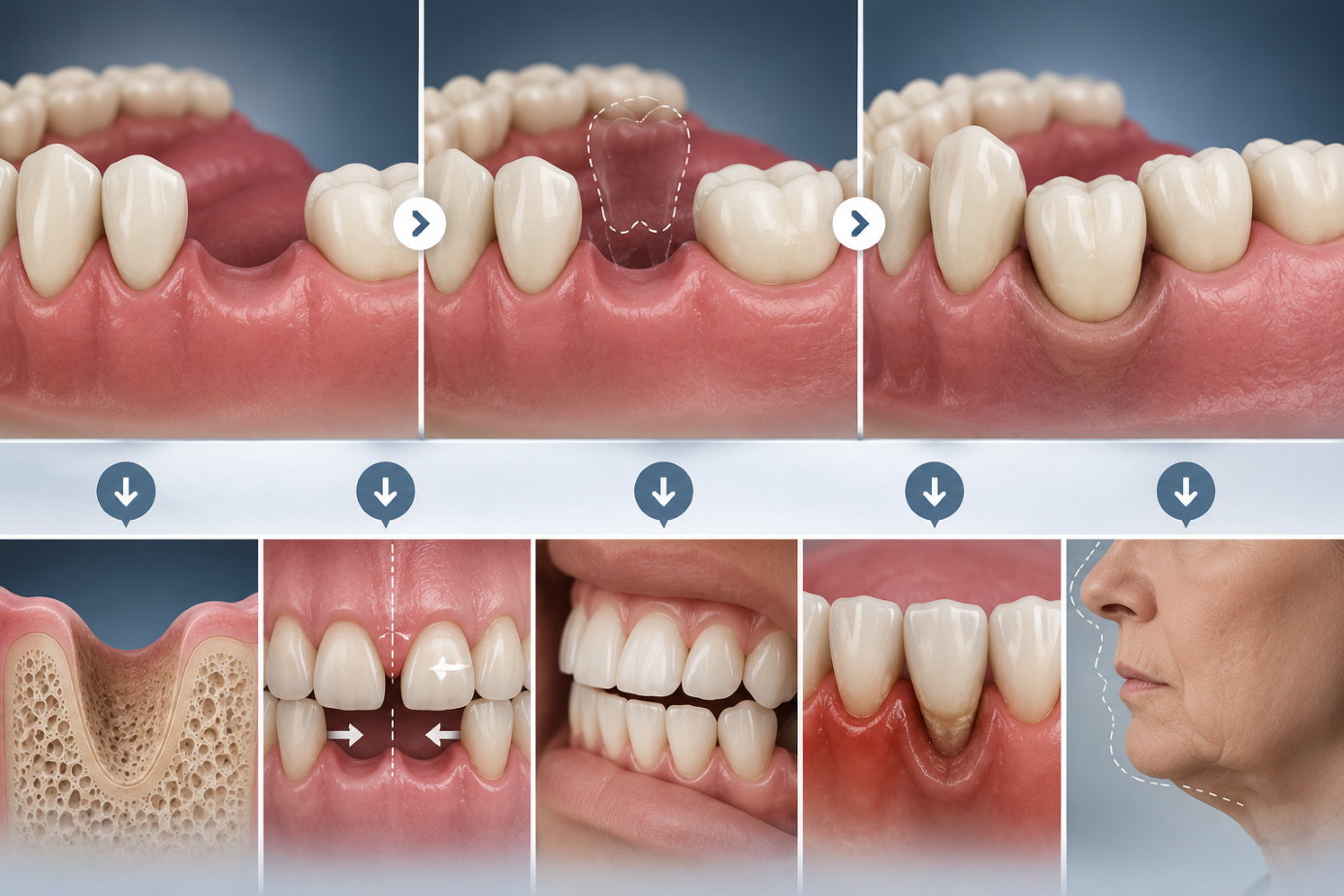
Bone Loss Begins Immediately
One of the most significant consequences of tooth loss is jawbone deterioration. The roots of natural teeth stimulate the jawbone whenever you chew. Once a tooth is lost, this stimulation disappears.
As a result, the body begins to resorb bone tissue in the area. Studies show that the greatest amount of bone loss often occurs during the first year after tooth extraction. This is one of the primary reasons what happens if you delay missing tooth treatment is a concern for dental professionals.
Bone loss can eventually make future restorative treatments, such as dental implants, more complex and may require additional procedures like bone grafting.
Shifting Teeth and Bite Problems
Your teeth work together as a system. When a tooth is missing, neighboring teeth can gradually drift into the empty space.
This movement may cause:
- Misaligned teeth
- Bite irregularities
- Difficulty chewing
- Increased wear on remaining teeth
- Jaw discomfort
Over time, these changes can affect both function and appearance, potentially leading to more extensive dental treatment in the future.
Increased Risk of Gum Disease and Decay
The gap left by a missing tooth can create areas where food particles and bacteria accumulate more easily. This increases the risk of:
- Gum inflammation
- Periodontal disease
- Tooth decay in adjacent teeth
- Bad breath
Maintaining oral hygiene becomes more challenging when tooth positions begin to shift, further increasing the likelihood of dental problems.
Changes in Facial Appearance
Many people are unaware that missing teeth can influence facial structure. The jawbone helps support the cheeks and lips. When bone loss occurs after tooth loss, the face may gradually develop a sunken or aged appearance.
Patients who delay treatment for many years often notice changes in their facial contours, making them look older than their actual age.
Treatment May Become More Complicated
Replacing a recently lost tooth is often more straightforward than treating long-term tooth loss. As bone volume decreases and neighboring teeth move out of position, additional procedures may be required before restoration can begin.
Potential treatments may include:
- Bone grafting
- Orthodontic correction
- Gum tissue procedures
- More complex implant planning
Addressing tooth loss early can help preserve healthy bone and simplify treatment.
Options for Replacing Missing Teeth
Modern dentistry offers several effective solutions for missing teeth, including:
- Dental implants
- Dental bridges
- Implant-supported restorations
- Full or partial dentures
Your dentist can recommend the most suitable option based on your oral health, bone condition, and treatment goals.
Final Thoughts
Understanding what happens if you delay missing tooth treatment highlights the importance of acting promptly after tooth loss. Missing teeth affect more than appearance—they can impact bone health, bite function, oral hygiene, and overall confidence.
Seeking treatment sooner rather than later can help preserve your oral structures, reduce future complications, and provide a healthier, more stable smile for years to come.


 Up to 70% less than Europe.