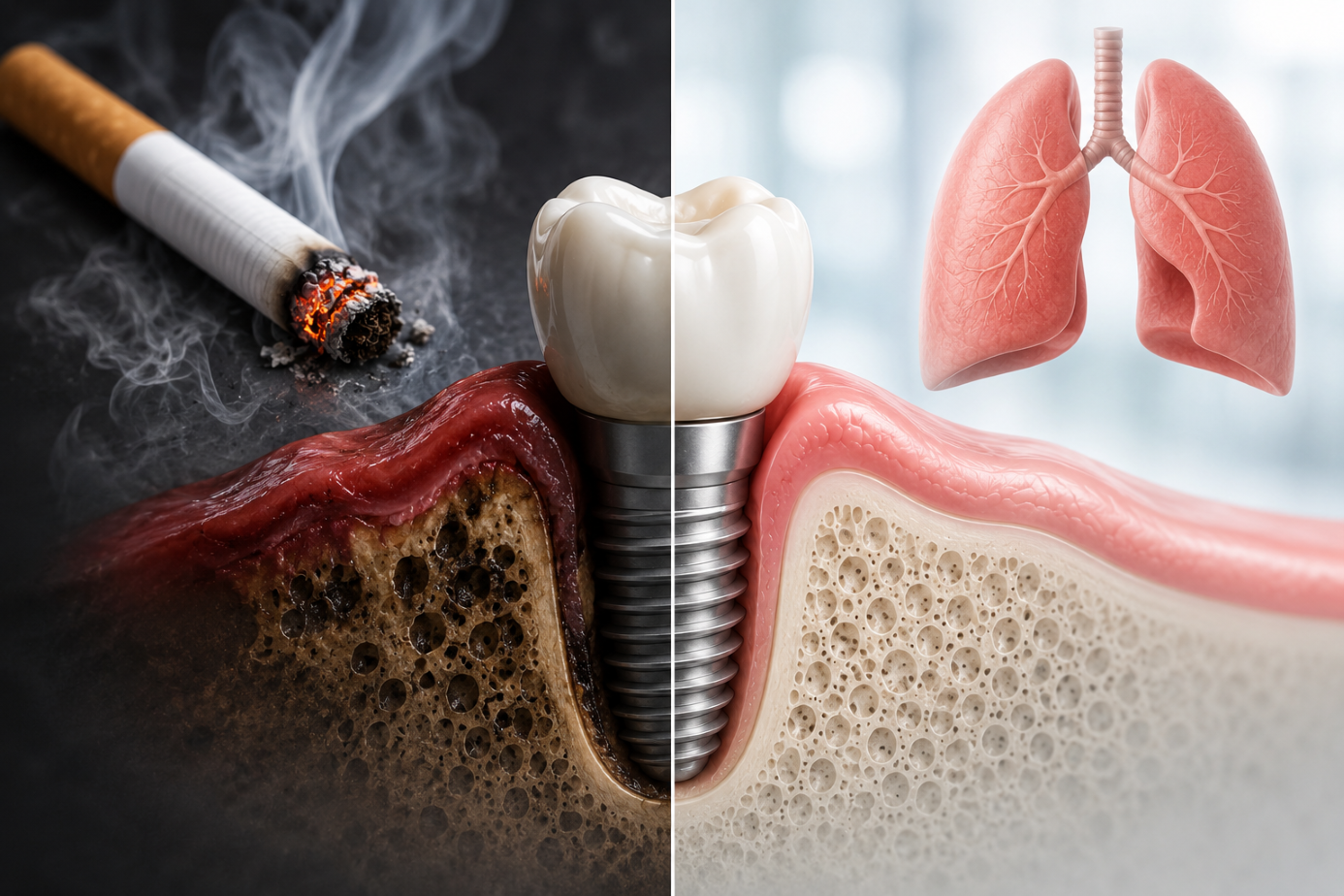
Why Smoking Is Harmful After Implant Surgery
After a dental implant is placed, the jawbone must heal around the titanium implant through a process called osseointegration. This healing phase is critical because it creates the strong foundation needed to support the final restoration.
Smoking introduces nicotine and harmful chemicals into the body, which reduce oxygen levels in the blood and slow tissue healing. Poor blood flow means the gums and bone receive less nutrition and oxygen during recovery. This is one of the primary reasons how smoking affects dental implant success becomes such an important topic in modern dentistry.
Patients who smoke are statistically more likely to experience implant complications compared to non-smokers.
Increased Risk of Implant Failure
Studies have shown that smokers face a significantly higher risk of dental implant failure. Smoking can weaken the connection between the implant and the surrounding bone, preventing proper osseointegration.
Common complications associated with smoking include:
- Delayed healing
- Gum inflammation
- Bone loss around the implant
- Increased risk of infection
- Implant mobility or failure
Heavy smokers are especially vulnerable because repeated exposure to nicotine continuously interrupts the healing process.
Smoking and Gum Health
Healthy gums are essential for successful implant treatment. Smoking weakens the immune system and makes it easier for bacteria to grow around the implant area. This can lead to peri-implantitis, a serious inflammatory condition that damages both gum tissue and bone.
Patients may initially feel no symptoms, but untreated inflammation can gradually compromise implant stability over time.
Can Smokers Still Get Dental Implants?
Yes, smokers can still receive dental implants, but dentists often recommend reducing or quitting smoking before surgery. Patients who stop smoking, even temporarily during the healing phase, generally experience better recovery and higher success rates.
Dentists may also recommend:
- More frequent professional cleanings
- Enhanced oral hygiene routines
- Regular implant check-ups
- Longer healing periods before final restorations
Following these recommendations can greatly improve long-term implant stability.
Tips to Improve Implant Success for Smokers
Patients who smoke can support healthier healing by:
- Avoiding smoking for at least several weeks after surgery
- Maintaining excellent oral hygiene
- Attending all follow-up appointments
- Using prescribed mouth rinses if recommended
- Following a healthy diet during recovery
Small lifestyle changes can make a major difference in implant success.
Final Thoughts
Dental implants can provide life-changing results, but proper healing is essential for long-term stability. Understanding how smoking affects dental implant success helps patients make informed decisions before treatment.
Reducing or quitting smoking not only improves implant outcomes but also benefits overall oral and general health. With the right care and professional guidance, patients can increase the chances of successful and long-lasting dental implant treatment.


 Up to 70% less than Europe.